
Cigar Guides
How to Cut a Cigar Properly (Straight, V-Cut & Punch)
Nov
How to Cut a Cigar Properly
Cutting a cigar takes about three seconds once you know where the blade goes — but it is the easiest step to get wrong. Cut too deep and the wrapper unravels; cut too shallow and the draw stays tight, so you puff harder and the cigar overheats.
What You Are Actually Cutting: The Cap and the Shoulder
Every handmade cigar is closed at the head — the end you put in your mouth — with a cap: a small piece of wrapper leaf held down with flavourless vegetable glue. The cap keeps the wrapper from unwinding.
Just below the cap, the rounded dome flattens out and the sides run straight — that transition point is the shoulder, your safety line. Cut above it and you remove only the cap; cut into or below it and you slice through the glue holding the wrapper down — the wrapper starts peeling loose, and nothing puts it back.
The rule every guide agrees on: cut just above the shoulder, never below it — removing only about 1/16 to 1/8 of an inch (2 to 3 mm) from the tip, far less than most beginners expect. Look for the faint seam where the cap ends and cut just above it. Many smokers aim for the 135-degree point on the curve of the head, where the dome starts flattening toward the body.
One rule never changes: always cut the cap, never the foot — the foot is the end you light.
The Three Ways to Cut a Cigar
There is no single correct cut — three good ones, and the right choice depends on the cigar in your hand and the draw you like.
1. The Straight Cut (Guillotine)
The most common and beginner-friendly cut. A guillotine cutter — preferably double-bladed — slices the cap off in one swift motion, giving the widest, most open draw. A double blade slices from both sides at once, so it tears the leaf less. Cigar scissors work the same way with extra precision. It works on nearly every shape, including pointed heads, and is the default choice when unsure.
2. The V-Cut (Wedge Cut)
A V-cutter takes a wedge-shaped notch out of the cap instead of slicing it off. The wedge reaches deep into the filler without ever crossing the shoulder, which makes it forgiving — and it concentrates the smoke for more flavour and a smoother, cooler draw. Best on medium and larger ring gauges with rounded heads; a deep V on a slim cigar can weaken the head.
3. The Punch Cut
A punch is a small circular blade that twists a plug out of the centre of the cap. Most of the cap stays in place, so there is almost nothing to unravel, and the smaller opening gives a firmer draw. It is quick and tidy, with fewer loose bits of tobacco in your mouth. Its limits: it suits thicker cigars with a rounded head, not a pointed torpedo, and if the hole is too small — or the cigar is over-humidified — the draw can feel restricted.
Choosing: look at the head before you reach for a cutter. A thick cigar with a rounded head gives you all three options; a pointed head narrows you to a straight cut.
How to Cut a Cigar: Step by Step
Step 1: Inspect the cigar and pick your cutter
Hold the cigar up and find the cap line, the faint seam near the tip. Check the wrapper is intact and the cigar feels evenly firm, with no hard or soft spots.
Your cutter should be sharp, clean, and suited to the cigar’s shape and ring gauge: a double-blade guillotine for straight cuts, a V-cutter for flavour concentration on round caps, or a punch cutter for a firm draw on thick, round-headed cigars (not torpedoes). A dull blade is the most common cause of a bad cut.
Step 2: Line up the cut
Place the cigar in the cutter just above the shoulder, keeping it straight and perpendicular to the blades. Check the alignment — this step decides whether the cut works.
Step 3: Cut in one confident motion
Close the cutter completely in one quick, firm motion. Do not saw, hesitate, or slowly press: a slow squeeze tears the leaf and can crush the head. One clean snip is the whole technique.
Step 4: Test the draw before you light
Take a gentle cold draw on the unlit cigar. It should feel open but with some resistance, like drinking through a straw. If it feels too tight, take a fraction more off the cap. If it feels wide open and loose, you probably cut too deep; light it anyway and smoke gently, since there is no way to put the cap back.
How to Cut a Torpedo or Figurado
Torpedoes and figurados have tapered, pointed heads, so start small: cut about 1/8 of an inch from the tip and take a little more off only if the draw is tight. A straight cut is the right tool — a punch is not much use on a pointed head, and a V-cut can weaken the narrow tip. Same rule: stay above the shoulder.
Common Mistakes and How to Fix a Bad Cut
- Cutting past the shoulder — the single most common error. The wrapper unravels and the smoke turns hot and harsh. Prevention is the only fix: always cut shallow, since you can take more off but never put it back.
- Cutting too little. The draw stays tight, you puff harder, and the cigar heats up — fix it by removing a fraction more of the cap.
- A dull or hesitant cut leaves a torn, ragged head and tobacco flakes on your tongue. Keep your cutter sharp and commit to one swift motion.
- Cutting the wrong end — it happens to every beginner once. If you cut the foot, the cigar will still smoke, but the draw and burn will suffer.
If the wrapper starts to unravel, a dab of flavourless vegetable glue can sometimes hold it. The real fix is the next cigar, cut shallow.
How to Cut a Cigar Without a Cutter
A sharp pocket knife works cleanly — hold the blade still against the cap just above the shoulder, roll the cigar against the edge to score a line all the way around, then peel off that outer layer. Sharp scissors can work in a pinch. Teeth are the last resort: bite gently to crack the cap and peel it, rather than chomping through. Never bite the cap off — teeth shred the wrapper and give a ragged draw.
Practice on a Cigar Worth Cutting Well
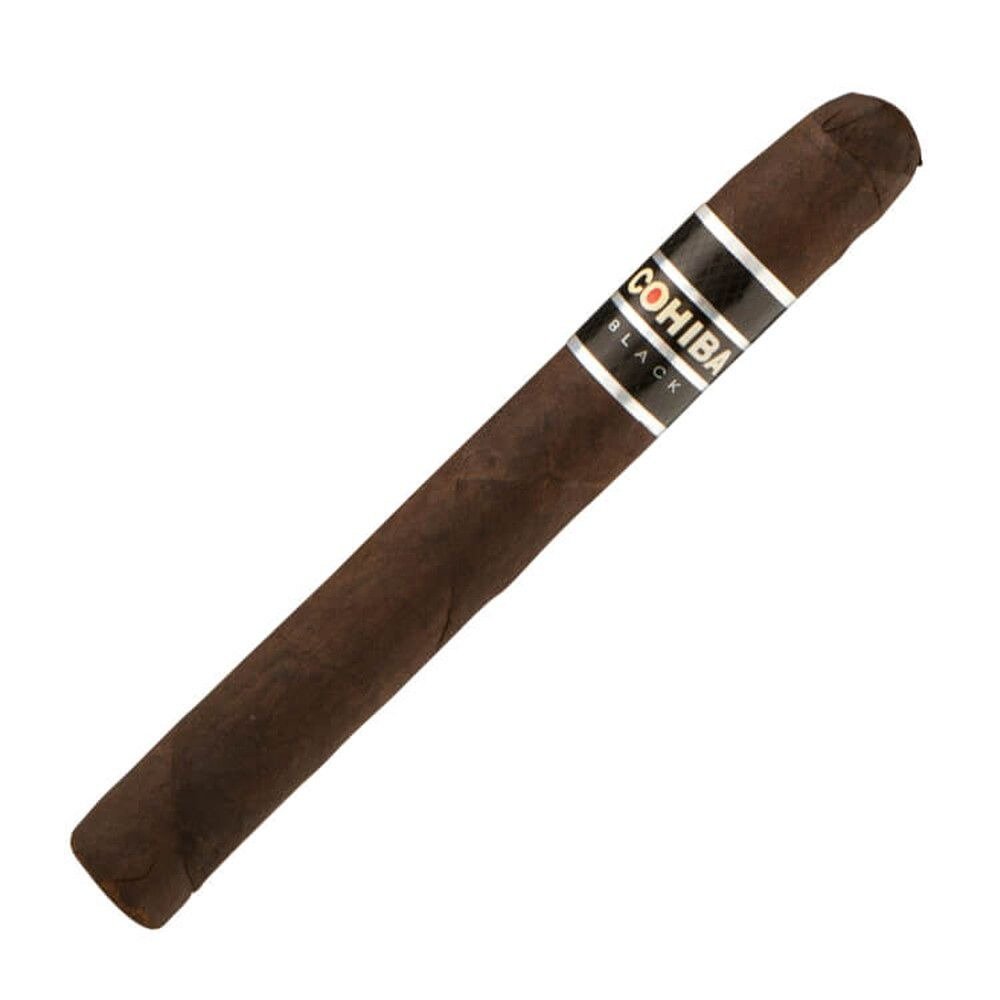
A clean cut only matters if the cigar underneath is worth smoking — and a well-made cigar with an intact cap, stored at the right humidity, is far more forgiving than a dried-out one. A shorter format like the Cohiba Black Pequenos is a good place to practise, while a Cohiba Black Robusto gives a classic rounded head that suits any of the three cuts. Browse the full range in our shop.
For adults only. Please enjoy cigars responsibly and in line with the laws where you live.
Frequently Asked Questions
Where do you cut a cigar?
Cut just above the shoulder — where the rounded head flattens into the body — removing only the cap, about 1/16 to 1/8 of an inch (2 to 3 mm) from the tip. Never cut below the shoulder.
Which cut is best for beginners?
The straight (guillotine) cut with a double-blade cutter — simplest, works on nearly every shape, and gives an open, even draw. The V-cut is a good second choice on medium-to-large ring gauges; the punch suits thick, round-headed cigars.
Can you cut a cigar with scissors or a knife?
Yes — sharp cigar scissors work well, and a sharp pocket knife can score and peel the cap in an emergency. What matters is a sharp edge and one clean motion.
What happens if you cut a cigar too deep?
Cutting past the shoulder removes the glue holding the wrapper down, so it peels loose, and the oversized opening lets in so much air that the cigar burns hot and fast. You cannot undo a deep cut, so always cut shallow.
